
Don’t Let Your Pooch Become a Hot Dog: A Desert Survival Guide
Hiking in the desert with a dog requires significantly more preparation than a standard trail walk due to the extreme environmental factors. Below are the best practices, gear checklist, and safety concerns to consider.
Core Best Practices
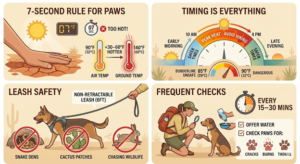
- The "7-Second Rule" for Paws: Before hiking, place the back of your hand on the ground. If you cannot hold it there for 7 seconds comfortably, it is too hot for your dog's paws. Ground temperatures can be 30–60 degrees hotter than the air temperature.
- Timing is Everything: Avoid hiking during peak heat (usually 10 AM to 4 PM). Aim for early morning or late evening. If the air temperature is over 85°F (29°C), it is often considered borderline unsafe for dogs; over 90°F (32°C) is generally dangerous.
- Leash Safety: Keep your dog on a non-retractable leash (6ft is standard). This prevents them from sticking their nose into snake dens, chasing wildlife, or running into cactus patches.
- Frequent Checks: Stop every 15–30 minutes to offer water and check paws for cracks, burns, or thorns.
What to Take: The Desert Dog Checklist
- Hydration & Cooling & Snacks
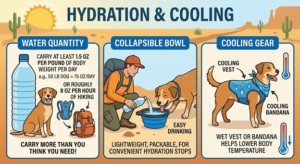
- Water: Carry at least 1.5 oz of water per pound of body weight per day, or roughly 8 oz per hour of hiking. Carry more than you think you need.
- Collapsible Bowl: For easy drinking.
- Snacks, high protein. To maintain dog's energy and stamina.
- Cooling Gear: A cooling vest or a bandana that you can wet and tie around their neck helps lower body temperature.
- Paw Protection
- Dog Booties: Essential for hot sand, sharp rocks, and cactus spines. Even if your dog dislikes them, bring them in your pack in case of a paw injury (they can act as a bandage cover).
- Paw Balm: To prevent cracking from dry sand.
- First Aid & Safety
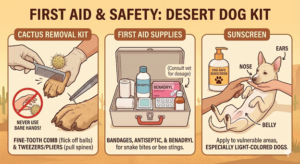
- Cactus Removal Kit: A fine-tooth comb (to flick off "jumping" cholla balls) and tweezers/pliers (to pull out spines). Never try to remove cactus balls with your bare hands.
- First Aid Supplies: Bandages, antiseptic, and Benadryl (consult your vet for dosage) for snake bites or bee stings.
- Sunscreen: Dog-safe sunscreen for nose, ears, and belly, especially for light-colored dogs.
Major Concerns & Hazards
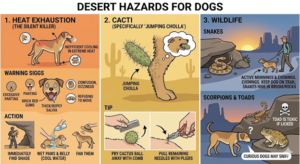
- Heat Exhaustion (The Silent Killer)
Dogs cool off primarily by panting and sweating through their paws, which is inefficient in extreme heat.
- Warning Signs: Excessive panting, "brick red" gums, thick/ropey saliva, confusion, dizziness, or lying down and refusing to move.
- Action: Immediately find shade, wet the dog's paws and belly (not ice cold water, just cool), and fan them.
- Cacti (Specifically "Jumping Cholla")
Cholla cactus segments detach easily and attach to fur. If your dog steps on one, they may try to bite it off, getting spines in their mouth.
- Tip: Use the comb in your kit to pry the cactus ball away from the skin before using pliers to pull out remaining needles.
- Wildlife
- Snakes: Rattlesnakes are most active in mornings and evenings (the same time you want to hike). Keep your dog on the trail; snakes often hide in brush or under rocks.
- Scorpions & Toads: Be aware that curious dogs may try to sniff scorpions or the Sonoran Desert Toad (which is toxic if licked).
- Valley Fever
A fungal infection caused by spores in desert soil. Avoid letting your dog dig in the dirt, as inhaling the dust can cause infection.
Recommendation
For a long hike, recommend "pre-hydrating" your dog by adding water to their food before you leave. Also, ensure your dog is conditioned for the terrain; soft grass-walking paws will tear easily on desert granite without booties.